
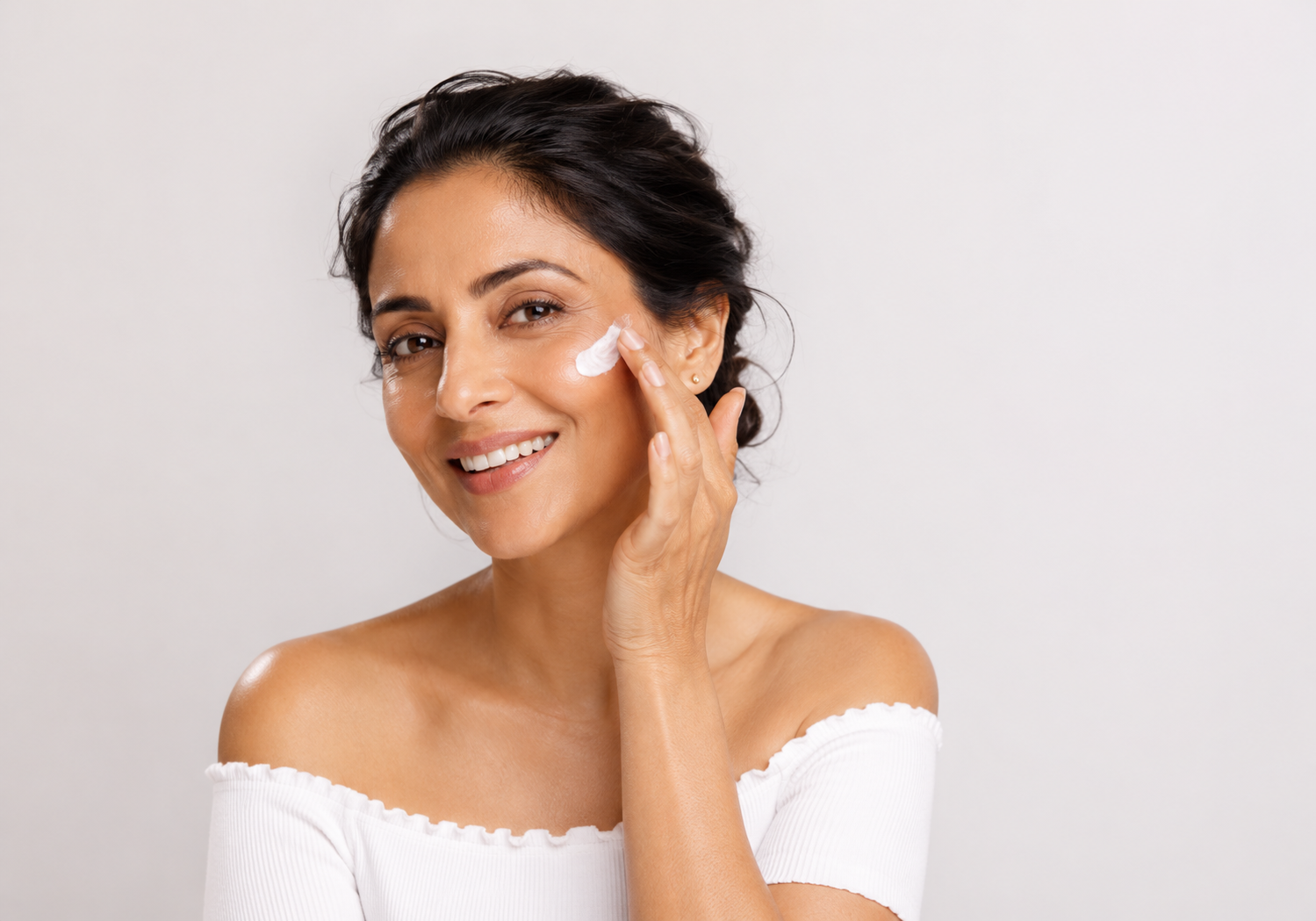
Would you like to do more to look after your skin and keep it looking fresh and healthy?
Your skin is influenced by all sorts of things, from your genes and hormones to sun exposure, skincare, smoking and the natural ageing process. Some of these are outside your control, but there are plenty of simple things you can do to care for your skin throughout your life.
If you’d like to understand more about what healthy skin actually means, start with our guide to what skin health is and why it’s important.
Here are ten practical ways to look after your skin and help it look its best.
1. Wear sunscreen regularly
If there’s one skincare habit worth prioritising, it’s sun protection.
Ultraviolet (UV) radiation can damage the skin and contribute to premature signs of ageing, including lines, wrinkles and changes in pigmentation. It also increases the risk of skin cancer.
Choose a broad-spectrum sunscreen with at least SPF 30 and good UVA protection for exposed skin. Remember that UV exposure is cumulative, so sun protection isn’t something to think about only when you’re on holiday.
Sunscreen is just one part of protecting yourself from the sun. Depending on the weather and UV levels, shade, clothing, sunglasses and a hat can all play a part too.
2. Stay adequately hydrated
Getting enough fluid is important for your overall health and normal body function, including the normal functioning of your skin.
But you don’t need to drink excessive amounts of water in pursuit of glowing skin. Drinking extra litres won’t flush “toxins” from your skin, clear your pores or make wrinkles disappear.
The NHS recommends aiming for around six to eight cups or glasses of fluid a day as a general guide, although you may need more in certain circumstances, such as during hot weather or prolonged physical activity.
If your skin feels dry, drinking more water isn’t necessarily the answer. Your skincare routine, environment, age and skin barrier can all affect dryness, and an appropriate moisturiser may be more helpful.
3. Keep your skincare routine simple
You don’t need a bathroom cabinet full of products to look after your skin.
For many people, the foundations of a good routine are straightforward:
- Cleanse gently: Remove make-up, sunscreen and everyday dirt without leaving your skin feeling stripped, tight or uncomfortable.
- Moisturise: Choose a moisturiser that suits your skin. If your skin is naturally oily, you may prefer something lightweight. Drier skin may feel more comfortable with a richer formulation.
- Protect: Finish your morning routine with appropriate sun protection.
Depending on your skin and what you’d like to improve, you might also choose products containing active ingredients such as vitamin C, niacinamide or retinoids.
More isn’t always better, particularly when it comes to active skincare. Introducing too many products at once can cause irritation and makes it difficult to know which products are actually helping.
Your skin’s needs can also change as you get older. Our decade-by-decade guide to your skincare needs explores some of the changes you might notice and how you can adapt your routine.
What about exfoliation?
Exfoliation can help remove dead cells from the surface of the skin, temporarily leaving it looking and feeling smoother.
How often you should exfoliate depends on your skin, the product you’re using and the other active ingredients in your routine. Some people may not need a separate exfoliating product at all.
Pay attention to how your skin responds. Over-exfoliation can disrupt the skin barrier and leave your skin feeling dry, sore or irritated.
4. Eat a varied, balanced diet
There isn’t a single food that will give you perfect skin, just as the occasional less nutritious meal won’t suddenly ruin your complexion.
Your skin does, however, need nutrients such as protein, essential fatty acids, vitamins and minerals as part of its normal structure and function.
Rather than focusing on individual “superfoods”, aim for a varied, balanced diet containing plenty of fruit and vegetables, sources of protein, wholegrain carbohydrates and unsaturated fats.
If you’d like to explore nutrition in more detail, read our guide to eating for healthy skin.
5. Get enough sleep
We’ve probably all looked in the mirror after a bad night’s sleep and thought we looked tired.
Lack of sleep can make changes such as dark circles, puffiness and a tired-looking complexion more noticeable. More importantly, getting sufficient sleep is an important part of looking after your overall physical and mental wellbeing.
Rather than thinking of sleep as an anti-ageing treatment, consider it another part of looking after yourself as a whole.
If you regularly struggle to get enough sleep, the NHS has practical advice that may help.
6. Find ways to manage stress
Stress doesn’t affect everyone’s skin in the same way, but some people find their skin changes or existing skin problems become more noticeable during stressful periods.
Looking after your wider wellbeing can therefore be valuable for many reasons, not just your skin.
There’s no single right way to manage stress. Regular physical activity, spending time outdoors, getting enough sleep, seeing people you enjoy being with or simply making time for things that help you switch off can all help.
If stress is significantly affecting your wellbeing, seek appropriate support rather than treating it as a skincare problem.
7. Stay active
Regular physical activity has important benefits for your overall health and wellbeing.
When it comes to your skin, it’s worth thinking about how you protect it while you’re exercising.
If you’re active outdoors, check the UV levels and use appropriate sun protection. Sweat and friction can also irritate some people’s skin, so showering or changing out of damp clothing after exercise may help you feel more comfortable.
And if your skin becomes red when you exercise, don’t assume something is wrong. Increased blood flow means temporary facial flushing is perfectly normal for many people.
8. Don’t smoke
Smoking affects almost every organ in the body, including the skin.
It is associated with premature skin ageing and can contribute to changes in skin texture, elasticity and the appearance of lines and wrinkles.
Not smoking, or stopping if you do smoke, is therefore one of the most valuable things you can do for your overall health as well as avoiding an established contributor to premature skin ageing.
If you’d like help to stop smoking, the NHS offers free information and support.
9. Be gentle with dry or sensitive skin
If your skin tends to be dry or sensitive, seemingly small changes can make a difference to how comfortable it feels.
Long, very hot showers and baths can strip oils from the skin and exacerbate dryness. Try warm rather than very hot water and choose gentle cleansing products that don’t leave your skin feeling tight.
After washing, applying moisturiser while your skin is still slightly damp can help reduce moisture loss.
And pay attention to what your skin is telling you. A product doesn’t have to sting, tingle or leave your face bright red to be “working”. Persistent irritation is a reason to reconsider what you’re using rather than push through it.
10. Consider professional treatments for specific skin concerns
Looking after your skin at home is the foundation of a good skincare routine. But you may also decide you’d like some professional help with a particular aspect of your skin’s appearance.
Rather than choosing a treatment because it’s described as being “good for your skin”, start with what you’d actually like to improve.
If your skin looks dull or feels rough
Professional exfoliating treatments can remove dead surface cells and temporarily leave your skin looking fresher and feeling smoother.
At Medikaur, options include dermaplaning and the ZO® Skin Health Red Carpet Peel.
If you’d like to improve texture or fine lines
Skin needling, also known as microneedling, creates controlled micro-injuries in the skin to stimulate its natural repair response, including collagen production and remodelling.
Over time, this can improve the appearance of skin texture, fine lines and firmness.
If hydration and skin quality are your priorities
Profhilo is an injectable hyaluronic acid treatment designed to improve skin hydration and the appearance of skin quality and firmness.
Unlike dermal fillers, it isn’t used to build facial structure or replace lost volume.
If you’re not sure which skincare products suit you
Professional skincare can be useful if you’re struggling to choose between different ingredients or your skin’s needs have changed.
At Medikaur, we offer ZO® Skin Health and Image Skincare products and can help you put together a routine based on your skin, lifestyle and what you’d like to improve.
Keep your skin healthy and looking its best
Your skin is a living, changing organ. It’s influenced by your genes, hormones, age, environment, lifestyle and the way you care for it.
You can’t control all of those things, and healthy skin doesn’t have to be poreless, line-free or flawless.
What you can do is protect your skin from avoidable damage, find a simple routine that suits you and adapt your skincare as its needs change.
If you’re noticing changes as you get older, our guide to skin ageing and how you can improve your skin explains what’s happening beneath the surface and what you can realistically do about it.
And if you’d like professional advice, we’ll start by looking at your skin and listening to what you’d like to improve. We can then talk through the skincare or aesthetic options that may be appropriate for you, without recommending treatment you don’t need.
Book your consultation to talk to us about your skin and what you’d like to achieve.